Treasury warns a prolonged oil shock could push inflation higher and cut growth, while small miners and regional users feel the diesel squeeze first.
Australia’s fuel buffer is under pressure as war in the Middle East drives up oil prices, squeezes refined fuel supply and exposes the country’s long-running dependence on imports. Treasury says a prolonged shock could lift inflation by another 1.25 percentage points and leave GDP about 0.6% lower around 2027.
The pressure hit an economy that was already running hot. Australia’s GDP grew 2.6% through the year to December 2025, annual CPI stood at 3.8% in January, and the Reserve Bank lifted the cash rate to 4.1% on March 17.
That combination matters because this is not only a price story. It is also a supply story.
Australia imports about 90% of its fuel, and Energy Minister Chris Bowen said on March 22 that the country held 38 days of petrol and 30 days of diesel and jet fuel. Bowen also said there were no immediate plans to ration fuel, even after six shipments from Asia were cancelled.
Canberra has already moved to release up to 20% of the baseline minimum stockholding obligation, equal to as much as 762 million litres of petrol and diesel, and temporarily relaxed fuel standards to allow an extra 100 million litres a month into the market.
Australia’s Fuel Buffer Under Pressure
The government says supply remains stable at the national level. That reassurance sits beside a more uncomfortable reality in regional Australia, where diesel shortages and allocation controls are already disrupting business. Reuters reported that Australia imported 84% of its petroleum product needs last year, while Bowen said diesel stocks were down to 30 days.
The stress comes from the Strait of Hormuz, where the conflict has all but stopped normal tanker traffic. Reuters reported that about a fifth of the world’s oil usually passes through the strait, while maritime war-risk insurance premiums jumped sharply after the conflict widened.
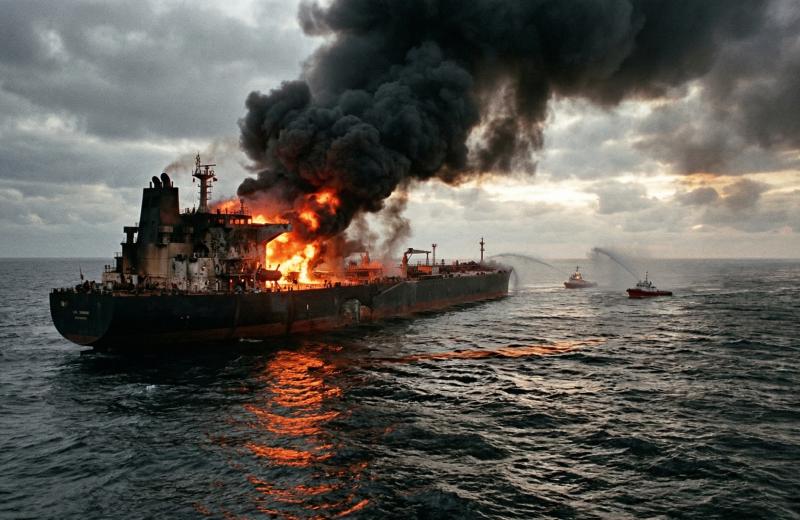
Illustration: A burning tanker highlights the kind of maritime shock that can tighten fuel supply and lift costs in Australia.
Diesel Squeeze Reaches Regional Australia
Regional users are feeling the shortage before the cities. Reuters reported that fuel suppliers and importers began allocating volumes about two weeks ago, tightening deliveries to regional distributors as diesel demand surged.
That pressure has already reached Western Australia’s smaller mining operators. ABC reported that Blue Cap Mining stood down about two-thirds of its 180-strong fly-in, fly-out workforce, with managing director Ashley Fraser saying the company had less than a fortnight of fuel on site at normal run rates.
Mining Exposes a Two-Speed Fuel Market
The diesel squeeze is not hitting the sector evenly. Major miners still hold stronger supply contracts and on-site stocks. Smaller operators, contractors and spot buyers look far more exposed. Reuters said farmers and miners without secure contracted supply were already searching for fuel as distributors ration deliveries.
Fortescue’s Dino Otranto put a price on the risk this week. He said every 10-cent move in diesel costs Fortescue $70 million, and every 10-cent move across the top four iron ore miners shifts the cost structure by about half a billion U.S. dollars. Reuters also reported benchmark Singapore diesel swaps were trading at slightly above $180 a barrel on Monday, up from $92.5 before the war.
The supply chain is also stretching further. Reuters reported that ExxonMobil, BP and Vitol are shipping the largest monthly volume of refined fuel from the United States to Australia in more than three decades, filling part of the gap left by disrupted Asian supply.
A Long-Term Vulnerability, Not a One-Off Shock
The immediate story is war, oil and diesel. The deeper story is national vulnerability.
Australia has only two operating refineries, in Geelong and Brisbane, and they cover only part of domestic demand. The country still holds fuel stocks far below the 90-day benchmark expected of IEA members.
That leaves the country exposed not only to a sudden conflict, but to any prolonged disruption in shipping, refining or regional distribution. The current crisis did not create that weakness. It revealed it.
McCormick also addresses Australia’s fuel buffer in his companion poem, The Thirty-Day Buffer.
For NewsBlaze Australia, that is the sharper political point. Australia’s fuel buffer was always thin. The Iran war just made the cost of that choice impossible to ignore.