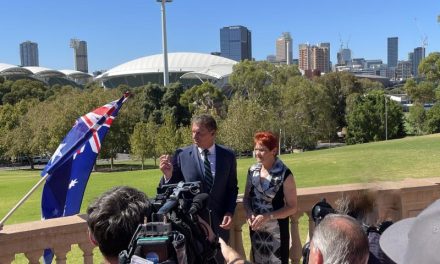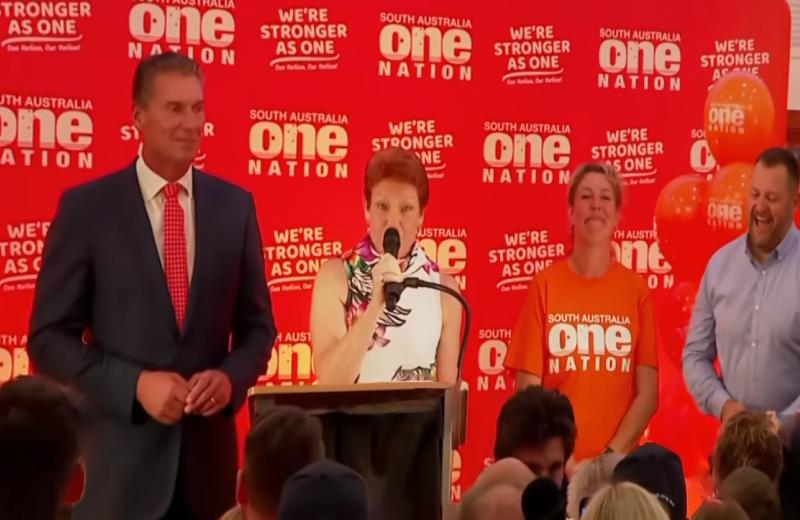
Labor won comfortably, but the bigger shock came on the right as One Nation overtook the Liberals statewide and scrambled the usual preference picture.
The One Nation surge, not Labor’s easy return, delivered the biggest shock of the South Australian election, pushing the Liberals into third place statewide and breaking the old two-party map.
With 64.9% of the lower-house vote counted on Monday afternoon, ABC party totals put Labor on 37.7%, One Nation on 22.1%, and the Liberals on 19.0%. The Greens stood on 10.3%, with others on 10.9%.
ABC’s live results page showed Labor on 32 seats won, the Liberals on four, One Nation on one, and others on two, with eight seats still in doubt.
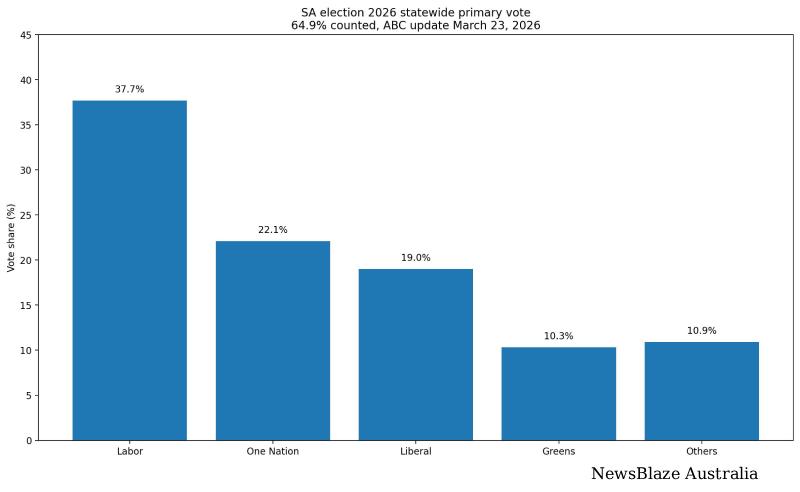
ABC party totals showed One Nation ahead of the Liberals statewide with 64.9% of the lower-house vote counted on March 23. NewsBlaze chart.
One Nation Surge Scrambles Old Count
ABC chief elections analyst Casey Briggs wrote that One Nation made the final two candidates in the count in most of South Australia’s 47 electorates. He said that forced the Electoral Commission to abandon its indicative election-night preference count in many seats and complicated the task of calling winners.
The Electoral Commission’s published counting method helps explain why. ECSA says booth staff first conduct a two-candidate preferred count using the two candidates predicted to lead, then carry out a corrected 2CP in the following days if those election-night assumptions prove wrong.
That pattern showed up across the state. ABC’s results page listed Ngadjuri as a One Nation gain, Hammond as One Nation likely, and MacKillop and Narungga with One Nation ahead. ABC also said Light remained a live Labor-One Nation contest as counting continued.
Across Adelaide’s northern and southern suburbs, ABC reported that One Nation had replaced the Liberal Party as Labor’s main opponent in many seats, even where Labor still looked safe.
The result did not come out of nowhere. In an April 2025 NewsBlaze Australia interview, One Nation Senator Malcolm Roberts said voter anger over immigration, housing stress and the cost of living was lifting support for the party, and he identified South Australia as one of the states where One Nation expected to strengthen its Senate position.
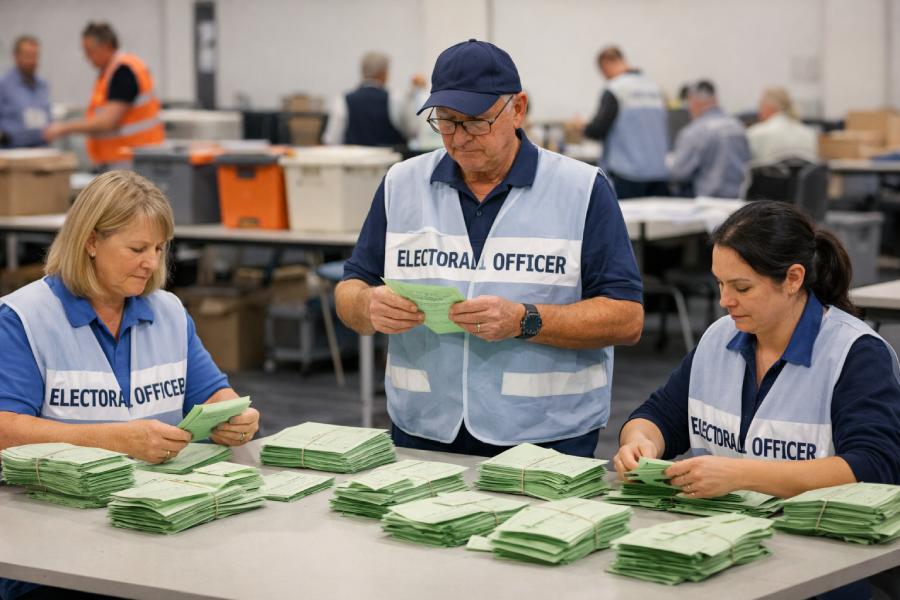
Counting continued after election night as One Nation reached the final two in most South Australian seats and disrupted the usual preference picture, illustration.
Legislative Council Surge Too
The surge also reached the Legislative Council. ABC’s upper-house page listed Cory Bernardi and Carlos Quaremba elected, Rebecca Hewett likely, and One Nation on 24.0% of the vote, ahead of the Liberals on 17.2%, with 50.4% counted.
The surge also reached the Legislative Council. ABC’s upper-house page listed Cory Bernardi and Carlos Quaremba elected, Rebecca Hewett likely, and One Nation on 24.0% of the vote, ahead of the Liberals on 17.2%, with 50.4% counted. Using the official ECSA figures at that stage of the count, Labor stood on 4.5 quotas on first preferences, One Nation on 2.9, the Liberals on 2.1 and the Greens on 1.3, with 57 of 59 early voting centres counted and 684 of 694 polling booths reported. The ECSA tally also showed 694,934 votes counted from 1,317,186 enrolled voters, including 671,534 formal votes and 23,400 informal votes. On those numbers, no other party appeared close enough to a quota to challenge the four main groups for the remaining upper-house places, leaving One Nation well placed to convert its vote surge into a third Legislative Council seat.
Earlier NewsBlaze Australia reporting pointed to the Legislative Council breakthrough before polling day. In February, NewsBlaze reported that Cory Bernardi had joined Pauline Hanson’s party at the top of its upper-house ticket, with the party arguing South Australia needed a “real opposition” and highlighting the preference math needed to convert a poll surge into seats.
Labor still dominated the election. But the broader political story ran deeper than the government’s win. ABC analysis said the South Australian result was One Nation’s best anywhere in the country in nearly 30 years, and the party’s first lower-house election win outside Queensland.
Even if the final seat tally shifts, the One Nation surge already changed South Australian politics by pushing the Liberals out of the familiar second-place position in large parts of the state and forcing a new look at how the contest now works.